A video drops you onto an unfamiliar street. Someone is walking with a camera. You hear traffic, catch a shop sign in a script you half recognize, and clock the way the buildings lean over the pavement. You have one job: name the city. That’s the city guesser challenge, and once it clicks, it’s very hard to put down.
This guide covers where the genre came from, how video-based guessing differs from the static Street View classics, the clues that crack a city fastest, and where you can play free without limits. We build one of these games ourselves, so we’ll be specific about what actually works.
Key Takeaways
- The genre’s namesake, City Guesser, launched on August 13, 2020 and jumped from 16,415 to 92,919 page views in about six weeks after a Reddit post (Cody DeBos, Medium, 2020).
- Video guessing rewards different skills than static panoramas: sound, movement, and crowds all become clues.
- Cities are the future of geography knowledge: 55% of the world already lives in urban areas, heading for 68% by 2050 (UN DESA, 2018).
- You can play unlimited street video rounds free in Where Am I? on iOS, Android, and the web.
What is a city guesser game?
A city guesser game shows you real footage of a city, usually filmed by someone walking, and challenges you to identify the location from visual and audio clues alone. The format was named by City Guesser, a browser game built by programmer Paul McBurney Jr. that launched on August 13, 2020, during the lockdowns (City Guesser, 2026).
Timing did a lot of the work. Billions of people were stuck at home, and a game that let you wander a street in Tokyo or Lisbon scratched an itch nothing else could. After a single Reddit post, the game grew from 16,415 unique page views to 92,919 in roughly six weeks (Cody DeBos, Medium, 2020).
What separates the genre from classic map games is motion. You’re not studying a frozen panorama. You’re watching a living street, which means the clues come to you: a bus livery, a snatch of conversation, a food stall, the rhythm of the traffic.
How did city guessing games evolve?
The genre moved through three clear stages, from static images to video to mobile. GeoGuessr started it in 2013 with Google Street View panoramas, drawing on imagery that now spans more than 110 countries (Wikipedia, 2025). City Guesser added walking video in 2020. Mobile games then took the video format into your pocket.
Economics reshaped the field too. GeoGuessr ended its free unlimited mode on February 1, 2024, leaving only a solo daily challenge free while unlimited play costs up to $6.99 per month (Sportskeeda, 2026). That pushed a wave of players toward free video-based alternatives, and it’s a big part of why the city guesser format keeps growing.
Why does video win for so many players? Because it’s closer to how you’d actually experience a place. A static panorama tests recall. A moving street tests perception.
How does the city guesser mode work in Where Am I?
Where Am I? is built entirely around street walk videos: each round plays real footage from somewhere on Earth, and you drop a pin on the world map to lock in your guess. Scoring is distance-based, so the closer your pin lands to the true location, the more points you earn.
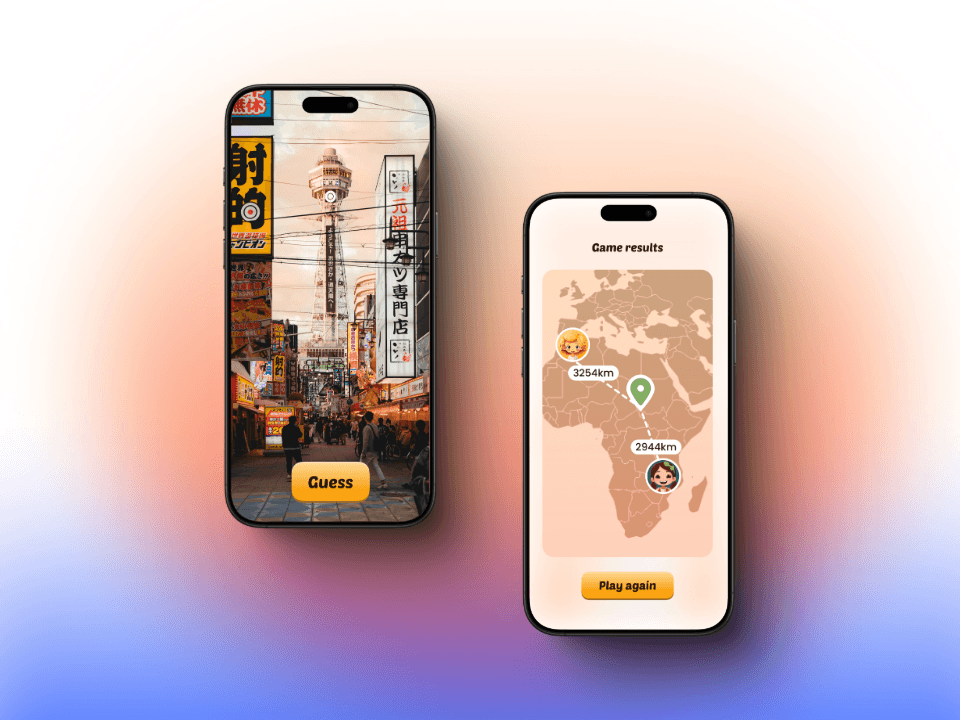
Rounds pull from regional playlists such as Worldwide, Europe, the USA, single countries, and themed sets like famous monuments. Campaign mode strings rounds into a progression, daily challenges reset every 24 hours, and ranked duels pit you against another player on the same video in real time.
Everything is free with no round limits. In our experience, that matters more than any single feature: clue reading is a volume skill, and a paywall caps your reps. If you want the full deduction toolkit, our guide on how to get better at GeoGuessr covers the clue categories that transfer directly to video rounds.
Ready to embark on your global adventure?
Click the buttons below to download Where Am I? and start exploring today!


Which clues reveal a city fastest?
Language and signage crack most rounds fastest, and the deeper structure of the street does the rest. Since 55% of humanity already lives in urban areas (UN DESA, 2018), cities share patterns, and learning to read them is the whole game. Check clues in this order:
- Script and language. Cyrillic, Thai, Hangul, or Arabic instantly narrows the world to a region. Even Latin script helps: ñ points to the Spanish speaking world, ø to Scandinavia.
- Driving side and vehicles. Left side traffic cuts away the Americas and most of Europe in one glance. Tuk tuks, yellow cabs, and double decker buses are city fingerprints.
- Architecture and street layout. Narrow winding lanes with shutters suggest old Europe. A strict grid with wide lanes leans North American. Tiled sidewalks in wave patterns? Think Portugal or Brazil.
- Climate and vegetation. Palms, pines, or bare branches set the latitude. Snow piled at the curb in the video tells you the season and hemisphere together.
- Sound. Video’s unique gift. Sirens, tram bells, call to prayer, and language in the crowd are clues no static panorama can offer.
Our take: the best players don’t find more clues, they discard faster. Each observation should eliminate a chunk of the map. If a clue doesn’t rule anything out, move your eyes somewhere else.
Tips to sharpen your observation skills
Observation is trainable, and the training method matters more than talent. Research on learning shows that actively retrieving knowledge improves retention by roughly 50% compared with passive review (Karpicke & Blunt, Science, 2011). Guessing, checking, and reviewing is exactly that loop.
A few habits compound quickly:
- Review every miss. After each round, look at where the video actually was and find the clue you overlooked. One minute of review per round beats an hour of extra play.
- Narrate your reasoning. Say it out loud or in your head: “left side traffic, Portuguese signs, tropical light, I’m saying Brazil.” Verbalizing forces your logic to be explicit, which exposes lazy guesses.
- Practice one clue family at a time. Spend a session only watching vehicles. Then a session on scripts. Focused reps build the mental checklist faster than scattered play.
- Use your travel memories. If a street feels like somewhere you’ve been, trust that instinct, then verify it against a concrete clue before you commit your pin.
Can you get good without ever leaving your country? Absolutely. Most top players learned the world’s streets entirely through their screens.
The social and competitive edge
Solo rounds teach you the world, but competition is what keeps players coming back: 76% of players say video games bring people together (Entertainment Software Association, 2025). In Where Am I?, live multiplayer duels put two players on the same video, ranked ladders track your rating over time, and weekly tournaments crown the sharpest eyes on the leaderboard.
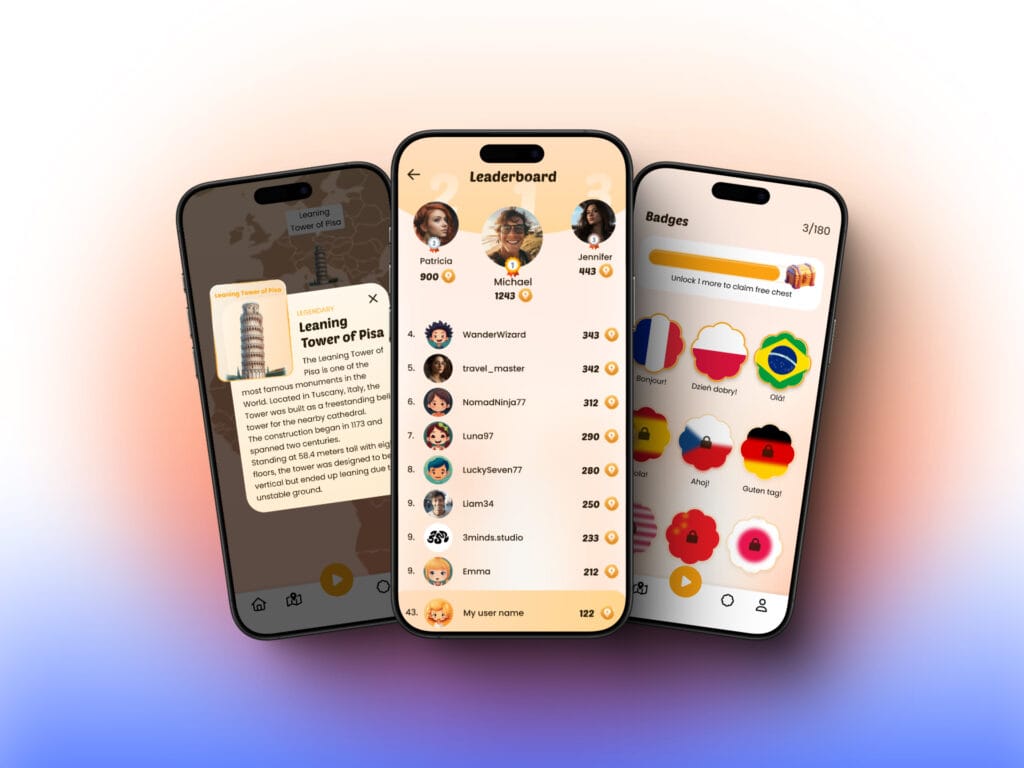
Competing changes how you watch. With a rival’s guess timer ticking beside yours, you learn to commit on partial information and to trust your first strong read. That pressure builds exactly the fast pattern recognition that separates casual players from consistent ones.
Communities add another layer. Players swap regional cheat sheets, argue about ambiguous rounds, and organize private matches with friends. If you’re exploring the wider scene, our roundup of the 10 best free GeoGuessr alternatives in 2026 maps out where the different communities live.
Why play city guesser games at all?
Because they teach the geography that increasingly matters: cities. The urban share of the world’s population is projected to climb from 55% to 68% by 2050, adding around 2.5 billion urban residents, and the world will have 43 megacities of more than 10 million people by 2030 (UN DESA, 2018).
Every round of a city guesser game is a small lesson in that urban world: how Jakarta’s streets differ from Lagos’s, why Buenos Aires feels European, what a Korean bus stop looks like. The knowledge sticks because you earned it by looking, not by reading a list.
There’s also the simple travel itch. Watching a real street in motion is the closest free substitute for being there, and for many players it becomes a shortlist builder for real trips. If that’s your angle, our virtual vacation guide goes deep on exploring the world from home.
What’s next for city guessing games?
Expect richer video, smarter hints, and more social play. The demand side backs this up: VR tours are the fastest growing slice of virtual tourism, expanding at a 25.6% annual rate through 2030 (Grand View Research, 2025). Streaming quality keeps climbing as networks improve, which directly upgrades a genre built on video. On the design side, the obvious frontiers are AI generated hint systems that adapt to your skill level, deeper custom challenge tools, and shared rounds where friends explore one street together.
One through line connects it all: fidelity. The closer the game gets to the feeling of standing on the street, the better it works, both as a game and as a way of learning the world. Video already beats static images on that score. Whatever raises immersion next will win.
Frequently Asked Questions
It’s a geography game format where you watch real street footage, usually filmed by someone walking, and identify the location from clues like language, architecture, traffic, and sound. The format’s namesake, City Guesser, launched on August 13, 2020 (City Guesser, 2026), and mobile games like Where Am I? brought the same idea to phones.
The core difference is the medium. GeoGuessr uses static Google Street View panoramas you click through, while city guesser games play continuous walking videos with real sound and motion. Cost differs too: GeoGuessr limited free players to a daily challenge in 2024, with unlimited play costing up to $6.99 per month (Sportskeeda, 2026).
Yes. The original browser based City Guesser is free, and Where Am I? offers unlimited free rounds with no subscription across regional modes, daily challenges, and multiplayer duels. Given GeoGuessr’s move to a paid model in 2024 (Sportskeeda, 2026), free unlimited play is the format’s biggest draw.
Scoring is distance based: you drop a pin on a world map and earn more points the closer your guess lands to the video’s true location. Most games show your miss distance in kilometers or miles after each round. That feedback loop is the fastest teacher, since every miss shows you exactly which clue you misread.
Review your misses and drill clue families one at a time. Active practice with feedback improves retention by about 50% over passive study (Karpicke & Blunt, Science, 2011). Start with scripts and driving side, then layer in architecture, vegetation, and sound. Volume matters, so practice somewhere without a round cap.
Final thoughts
The city guesser challenge took a simple lockdown idea, watching someone else’s walk and guessing where they are, and turned it into one of the most quietly educational game genres around. The skills stack: scripts, streets, sounds, and seasons, each one another lens on a world where two in three people will soon live in cities.
Start with the big clues, review every miss, and let the rounds pile up.
Ready to guess your first street? Play Where Am I? free on iOS, Android, or the web, with unlimited rounds, daily challenges, and live duels waiting.
Disclaimer: Where Am I? is an independent game and is not affiliated with GeoGuessr, City Guesser, or Google.
Sources
- City Guesser (Virtual Vacation), “About,” retrieved 2026-07-03, https://virtualvacation.us/about
- Cody DeBos, “Exclusive Interview with City Guesser Creator Paul McBurney Jr.,” Medium, retrieved 2026-07-03, https://codydebos.medium.com/exclusive-interview-with-city-guesser-creator-paul-mcburney-jr-f16ae945ba2
- UN DESA, “68% of the world population projected to live in urban areas by 2050,” retrieved 2026-07-03, https://www.un.org/en/desa/68-world-population-projected-live-urban-areas-2050-says-un
- Sportskeeda, “GeoGuessr going paid after ending free subscription,” retrieved 2026-07-03, https://www.sportskeeda.com/esports/news-corpo-gonna-corpo-geoguessr-going-paid-ending-free-subscription-fans-disappointed
- Wikipedia, “Google Street View,” retrieved 2026-07-03, https://en.wikipedia.org/wiki/Google_Street_View
- Entertainment Software Association, “Annual ESA Study Reveals Video Games’ Universal Appeal Across Generations,” retrieved 2026-07-03, https://www.theesa.com/annual-esa-study-reveals-video-games-universal-appeal-across-generations/
- Grand View Research, “Virtual Tourism Market Size To Reach $30.54 Billion By 2030,” retrieved 2026-07-03, https://www.grandviewresearch.com/press-release/global-virtual-tourism-market
- Karpicke, J. D., & Blunt, J. R., “Retrieval Practice Produces More Learning than Elaborative Studying with Concept Mapping,” Science, retrieved 2026-07-03, https://www.science.org/doi/10.1126/science.1199327

The Where Am I? team builds a free geography guessing game that drops players into street walk videos from around the world and challenges them to pin their location on the map as accurately as possible.
Available on iOS and Android, the game offers campaign challenges, tournaments, live multiplayer duels, global leaderboards, and a collection system built around famous monuments such as the Eiffel Tower, the Colosseum, and the Statue of Liberty.
Positioned as a free alternative to GeoGuessr with no paywall, Where Am I? makes geography gaming open to every kind of player.
On this blog the team shares guides, country breakdowns, and practical tips that help players read visual clues, climb the leaderboard, and explore the world from their screen.